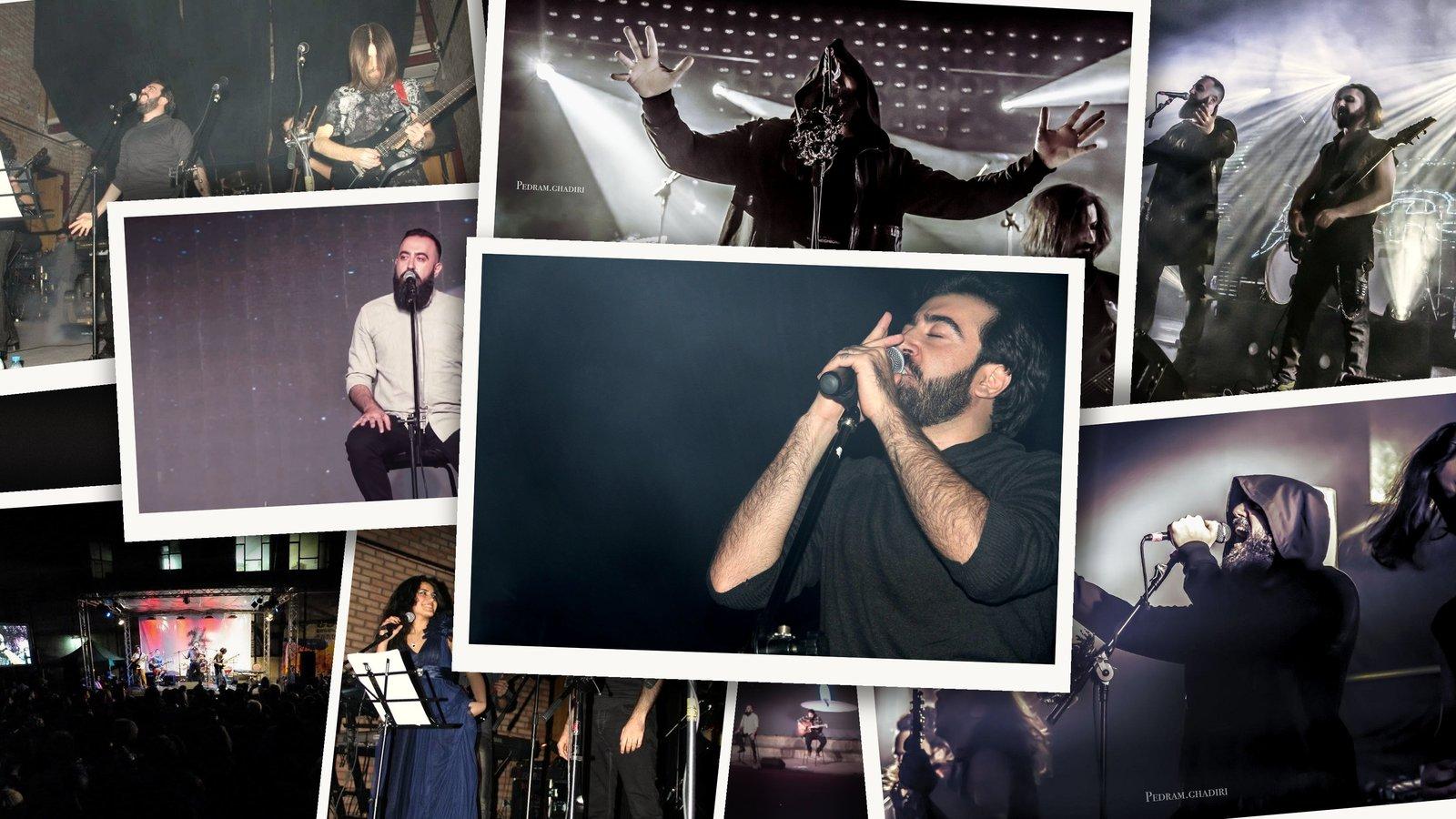
Before I did commercials, before documentaries, before games and characters, I already had another voice. This one was made of guitars, drums, and singing. Music has been part of my life for as long as I remember, and my first memories of it are not about a band or a genre. They are memories of home.
My mother loved Queen, Tina Turner, Depeche Mode, Europe, and many more. Those songs were always playing in our house, and over time they became part of me. My father had his own collection: old cassette tapes, from Santana to Deep Purple to Pink Floyd to Camel, plus old classics and tangos. He labeled every tape and even color coded them. He did not just collect music. He took care of it, like a small library.
The first big moment came after Freddie Mercury died. There was a tribute concert at Wembley Stadium, to remember him and raise awareness about AIDS. I watched it on a VHS tape with my mother. In between the tributes to Freddie, I saw Metallica, Guns N' Roses, and Def Leppard for the first time, and I could not look away. Something about that energy caught me completely.
But I did not become a metal fan right away. The music itself was fascinating, but the people around me who listened to it had a reputation I did not want any part of, and with the naive, black-and-white mind of a child, I chased the idea of being a good kid instead. It did not help that the only name I ever heard from any of them was Metallica, never anything else, so that one word became the entire genre in my head. Little by little, I drifted away from it.
As a teenager, I had already started teaching myself English on my own. Then a friend introduced me to rap, mostly gangsta rap, and it threw me straight into an ocean of new vocabulary, slang, and idioms. I listened to it constantly, and along the way I even picked up the whole history of the East Coast and West Coast rivalry. It became a way of studying a language without ever feeling like I was studying.
At the same time, I found Dire Straits and a run of other great rock bands, and something started to stir, not just guitars, but the whole world of rock and metal I had loved as a kid. It would take one more push to fully wake back up.
That push came somewhere in the middle or later years of high school. A close friend introduced me to Manowar, and something clicked immediately, like finding a piece I had been missing without knowing it. From that day, I never left metal again.
The internet was just starting to open up around then, and for someone who loved music, it felt like stepping into an endless universe. What began as a few albums passed between friends quickly turned into an ocean of bands, genres, and sounds waiting to be found.
What I did not know at the time was how far that Manowar album had actually traveled before it reached me. My friend had grown up around those albums because of his older brother, and his older brother had gotten them from someone who, back then, was quietly keeping the capital, and a few other cities, supplied with music that was not exactly easy, or legal, to come by. Long before streaming and instant access, finding a new band depended entirely on people: someone making you a copy, someone handing you a cassette, someone simply saying, "Trust me, you need to hear this." It was its own underground relay, passed from one person to the next, until eventually that album found its way into my hands. Years later I would learn exactly who that someone was, and life would bring our paths together in a way I never expected. More on him later.
Looking back, it feels less like I discovered metal and more like I inherited it. Maybe that is how music has always survived. None of us really finds it alone. We just become the next person who passes it forward.
There is a funny side to all of this too. The friend who actually handed me that Manowar album still proudly tells people, "I'm the one who turned Vahik into a metalhead." Enough people have asked me over the years, half amused, half genuinely curious, "Is it true? He says this, he says that," that I figure it is finally worth answering properly. So here it is: he is not wrong. That album really did travel from his hands into mine, and that moment genuinely changed my life. The twist is that he was never really the beginning of the story. He was one link in a much longer chain, and everything after that moment was mine to build.
Years later, when we started making noise, when we played shows, when younger musicians told us we had inspired them, there was one person who never quite joined in the celebration. The irony was not lost on me: the guy who loved taking credit for creating a metalhead was nowhere in sight when it came time to actually cheer for the metalhead he helped create. We are on pretty good terms these days, and I have never actually brought it up with him. Every story has different characters. Some people open the door for you. Some walk through it alongside you. And some just hand you the first album that changes everything.
Back to the main story. I had always loved singing, since I was a small child, but I never thought I would really become a singer. In university, one of my closest friends, Christopher, fell in love with the bass guitar, learned to play, and joined a local band. For months I kept asking him the same question: did they need another singer? The band already had one, but eventually, for reasons that had nothing to do with me, they decided they wanted someone new. That is how, late in 2004, I ended up joining my first real band.
Chris picked our name: Warg Riders, after the Lord of the Rings phase the two of us were deep into back then.
My first time performing in front of a real crowd since kindergarten was a guest show for almost a thousand people. I was frozen, genuinely terrified, but somehow I got through it. After that came two full concerts, in 2005 and 2006. Most of the songs were covers, but at the final concert in 2006, we finally played the one song we had written ourselves. We were not perfect, but people noticed us. A few younger fans who came to our shows later formed their own bands, and some of them are still active and doing well today, like Avarayr. It was strange to realize we were doing for them exactly what had once been done for me, without ever planning it that way.
Around the same time, Chris and I also started an Armenian rock band called Kavaran. I picked the name myself. It means something like purgatory, or limbo, because that is exactly how our situation felt back then. We played Armenian songs with rock arrangements, performed at different events, and in 2008 we played at the "One Nation, One Culture" festival in Armenia.
I was always studying or working, and the local music scene was never easy for the kind of music we loved. So I never treated it as a real career, only as something important that I kept doing in the background.
One happy accident happened around this time too. I was messing around trying to imitate the voice of a Nazgûl, the scary Ringwraiths from Lord of the Rings, and somewhere in there I accidentally discovered my harsh, screaming vocal style. To test if it actually sounded metal and badass, and not just silly, I recorded a song called "Blinded Mind" with a project called Pairika. It passed the test.
Over the years, I worked with different bands whenever I could. I recorded "Doom in Heaven" with Qutin, a band that was quite prominent in the scene back then. I could not stay on to finish the album with them, but they thanked me anyway: my name is still in their album credits, and my backing vocals are still on the released song. I also recorded "Battle of Destiny" with a band called Metaphor. That band later became Adana Project, a name doing very well today, and this is where that earlier story finally closes its loop. The drummer of Adana Project is that same mysterious someone from years before, the one who had quietly been keeping the capital supplied with music nobody was really supposed to have. These days he is one of my closest friends. Funny how these things circle back.
After that came years of guest appearances and short projects, whenever I had free time. Some of my favorite memories are performing with Undor in 2012 and 2013. Then came Scions of Selardi, a comeback project I put together with Chris and a small group of other talented musicians, aiming for something loud, brutal, and full of energy. We managed one show, just a few months before COVID changed everything.
In mid-2023, I finally left the corporate world. The plan was simple: take a proper vacation, then go all in on freelance work. But before any of that could really begin, I was invited to join a band called Atria, completely out of nowhere. Not long after, we were preparing for a metal festival in Dubai, where we opened for SepticFlesh, with Pain also headlining. I could not believe it. I barely told anyone before it actually happened, mostly because some part of me needed to see it for myself before I could believe it was real. Once it was over, it took a while to properly sink in. I am still part of Atria today, and I hope we start making music together soon.
Even now, people still reach out and ask me to join in, on stage or in the studio, whenever they need a guest voice. I have gotten to sing with my good friend's band, Azhirock, at live shows, and to lend guest vocals to studio releases like the ones from my great pal's project, Noire. It is a small, steady reminder that this side of me never actually went away, it just found new ways to show up.
Looking back, music gave me more than songs. It gave me real friends, good memories, and the confidence to perform in front of people. Maybe that is why becoming a voice actor felt natural to me. It was not a new path, just a different way of using the same voice.
This whole website is my Side A. Everything you just read is Side B. Then again, maybe it's the other way around.
To close, I want to share our latest song, "At the Lowest," my collaboration with Noire, released in 2025. I was just the vocalist on this one, but I hope you enjoy it as much as I enjoyed recording it.